
Reviewed · HISTORICAL TOURS
Riyadh: Historical City Full-Day Guided Tour with Transport
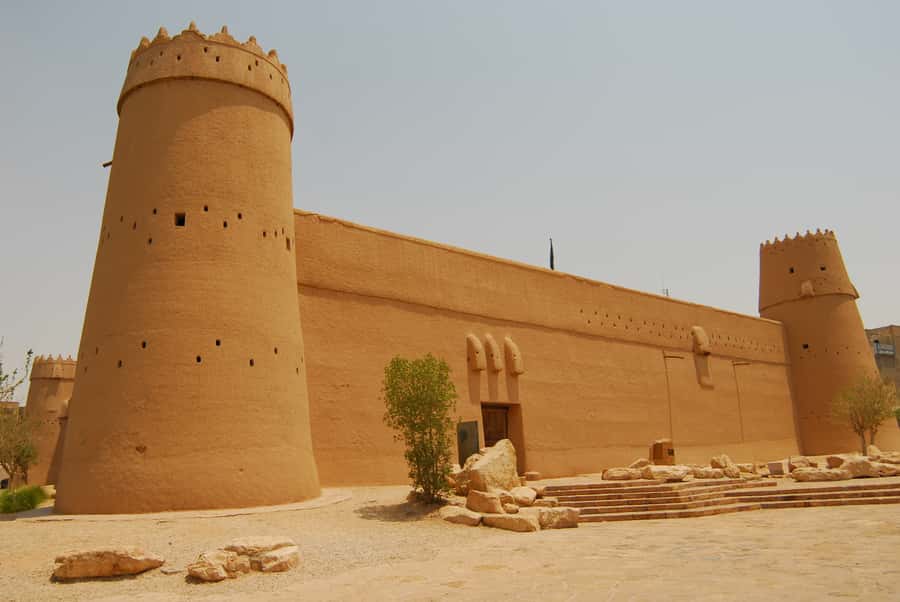
Riyadh’s story comes into focus through its forts, royal buildings, old market lanes, and museum displays. This six-hour tour gives you a useful first look at the city, from the National Museum of Saudi Arabia to the wooden gate of Al Masmak Fortress, where a spearhead linked to King Abdulaziz’s capture of Riyadh can still be seen.
I like two things here: the route joins major sights that are spread across the city, and the group is limited to five people. Hotel pickup, transport, entrance fees, and an English or Arabic-speaking guide make the day simple to arrange. One consideration is the guide service. A verified booking review praised the local guide but found the English difficult to follow and the guide distracted by his phone, so communication may not be equally strong on every departure.
Key points to know before booking
- The National Museum anchors the tour: Eight halls cover Saudi Arabia from early human history through the formation of the modern kingdom.
- Murabba Palace adds royal context: You see a traditional Najdi-style palace built for King Abdulaziz and his family.
- Dirah Souq is the shopping stop: Look for copper and brass goods, silver daggers, Bedouin jewelry, dresses, carpets, and other heritage items.
- Al Masmak makes history physical: Exhibits, maps, photographs, and a short film explain the fortress and the capture of Riyadh.
- Transport keeps the route practical: Hotel pickup and drop-off are included in a modern, air-conditioned van.
- The tour is small and adjustable: Up to five people can join, and the itinerary may be customized to your preferences.
A six-hour route through Riyadh’s old royal quarter
This experience is sold as a full-day historical tour, but the stated duration is six hours. That is long enough to visit the main sights without turning the day into an endurance test, though your time at each stop may depend on traffic, opening arrangements, and the pace of your group.
Pickup and drop-off at your Riyadh hotel remove one of the city’s practical headaches. You do not need to work out several taxi journeys between distant sights, and the air-conditioned van matters in Riyadh’s heat. The group limit of five gives the day a more personal feel than a large coach tour, although the quality of the experience will depend heavily on the guide assigned to you.
The guide is expected to talk during the drives, explaining the places you pass and adding context to the visits. English and Arabic are available. If you need detailed historical explanations in English, it is sensible to confirm the language arrangements before booking, since one verified review reported communication difficulties with the guide.
A few more Riyadh trips to weigh up
- Red Sand Adventure 4×4 (Camel Ride ,Quad Biking, Heritage House)
★ 5.0 · 135 reviews - Red Sand Adventure Riyadh (Quad Biking,Camel Ride,Heritage)
★ 4.6 · 19 reviews - Red Sand Dunes Tour with Camel Ride ,Quad Biking, Heritage House
★ 4.0 · 16 reviews
The National Museum: eight halls of Saudi history
The National Museum of Saudi Arabia is the intellectual center of this route. Established in 1419 as part of the King Abdulaziz Historical Center, it presents Saudi history in chronological order rather than as a loose collection of objects.
You move through eight main halls:
- Hall of Man and the Universe
- Arab Kingdoms
- Pre-Islamic Era
- Prophet’s Mission
- First Saudi State
- Unification of the Kingdom
- Hajj
- The Two Holy Mosques
That sequence helps you understand the broad arc of the country. You begin with early human history and the natural world, then move through Arabia’s ancient kingdoms, the arrival of Islam, the Saudi states, and the creation of the modern kingdom.
The museum also contains examples of Arabian and Islamic art and architecture. The displays listed for the visit include a prehistoric elephant skeleton, a large meteorite found in the Empty Quarter, pre-Islamic rock graffiti from the Hejaz region, a copy of the Rosetta Stone, and an example connected with the rock-cut tombs of Mada’in Saleh.
These objects give the museum variety. You are not looking only at royal portraits or political documents. The elephant skeleton and meteorite offer a look at the region’s natural past, while the rock graffiti and tomb material connect Saudi Arabia with older trade routes and cultures.
The museum also presents manuscripts, antiques, and documents connected with the Saudi royal family, the kingdom’s formation, and its political development. I like this stop for first-time visitors because it gives you a framework for the rest of the day. After seeing the museum, Al Masmak and Murabba Palace make more sense.
The possible drawback is scale. Eight halls can feel rushed if your guide moves quickly or if you want to read every label. Ask at the start how much time you will have inside, then focus on the objects and halls that interest you most.
The National Museum Park and King Abdulaziz’s car hall
After the indoor galleries, the route continues through the National Museum Park. The outdoor gardens provide a change of pace and a chance to walk after several rooms of displays.
The park is described as a family-friendly open area within the King Abdulaziz Historical Center. It is not simply a passing view from the van. You have an opportunity to walk through the gardens and take photographs, though the exact amount of free time depends on the day’s schedule.
Next comes the Hall of King Abdulaziz, which includes a showroom of cars used by the king. This is a small but useful addition to the museum visit. The cars make the royal story more personal and concrete, showing the material side of the monarchy rather than presenting it only through documents and formal exhibits.
If you have a strong interest in cars, royal objects, or twentieth-century Saudi history, this hall may deserve extra time. If you prefer archaeology, art, or religious history, you may want to keep the visit focused and save more time for the palace and fortress.
Murabba Palace and traditional Najdi building
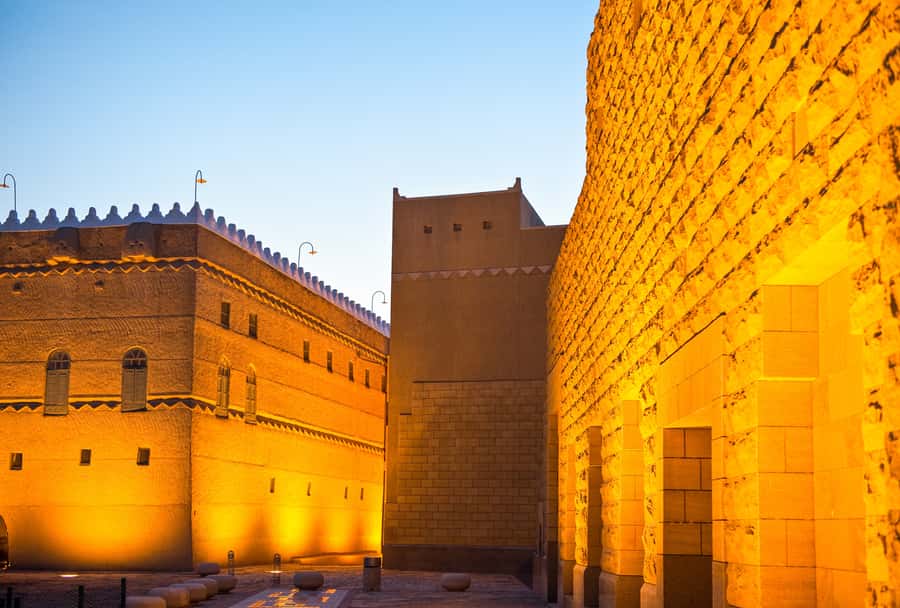
Murabba Palace was built by King Abdulaziz to accommodate his family. Its importance is not only political. The building also shows how local materials and traditional Najdi design were used in a royal setting.
The palace was built in the local Najdi style, using local building materials. That makes it a useful contrast with modern Riyadh, where glass towers and broad roads now dominate the view. Inside, you can take photographs and look at the rooms as a formal home connected with the early Saudi state.
I find palace visits most rewarding when you pay attention to practical details: the shape of the rooms, the materials, the arrangement of spaces, and the way a royal building still reflects local building traditions. The visit here is more about atmosphere and architecture than a large collection of objects.
The tour information does not specify how much time you spend inside Murabba Palace. If photography is important to you, ask your guide about the available photo areas and pace. The palace is one of the places where a little extra time can make the stop feel less like a quick checklist visit.
Same desert, a completely different kind of day:
- Riyadh: Edge Of The World, camels &Stargazing with 4×4
★ 4.7 · 1,050 reviews - Edge of The World Riyadh with Camel Ride ,Bat Cave Visit & Dinner
★ 5.0 · 778 reviews - Edge Of The World Hike(Dinner under stars,village,bats cave,camp)
★ 4.5 · 675 reviews - Edge of the World with 4×4 vehicles, sunset Dinner and stargazing
★ 4.5 · 567 reviews
Dirah Souq: copper, silver, carpets, and sandalwood
Dirah Souq is the most hands-on stop of the day. This traditional Saudi market is known for copper and brass objects, silver daggers, Bedouin jewelry, dresses, antique carpets, and other heritage items.
The market’s main access is known for its sandalwood fragrance, which gives the arrival a distinct sensory touch. From there, you can browse the shops and compare objects rather than simply looking at them behind museum glass.
This is a good place to look for a practical souvenir with a connection to Saudi culture. The listed goods include antique carpets and other heritage antiques, but you should inspect condition and ask about prices before buying. The tour does not state that purchases are included, so shopping is your own expense.
Allow yourself time to browse without feeling obliged to buy. A market stop works best when you look closely at the workmanship, ask questions, and decide what fits your luggage and budget. The guide may help with context or local customs, but the information provided does not promise shopping assistance or translation at individual stalls.
Dirah Souq also balances the more formal museum and palace visits. You are not only being shown the past. You are seeing how traditional objects continue to circulate as goods.
Al Masmak Fortress and the capture of Riyadh
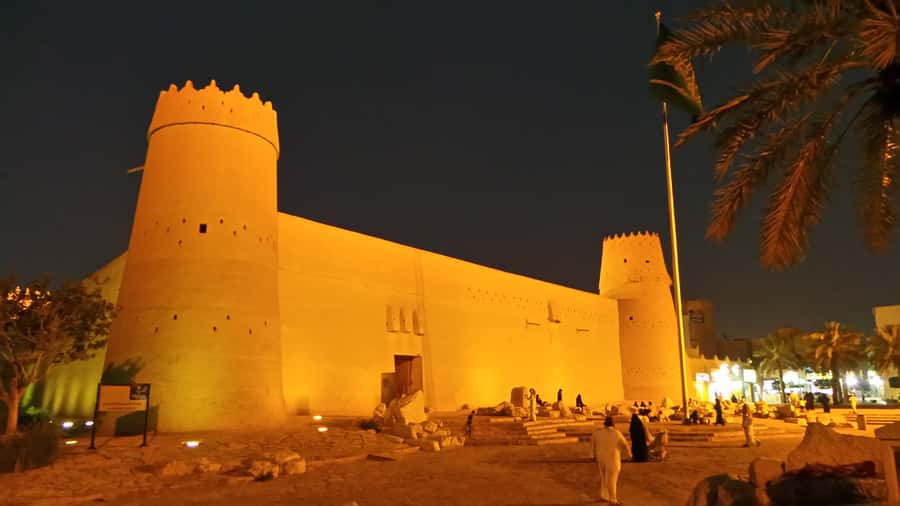
Al Masmak is the most direct historical stop on the route. This fortress is tied to King Abdulaziz’s capture of Riyadh, an event central to the formation of modern Saudi Arabia.
Inside, exhibitions present maps and photographs alongside historical artifacts, artworks, and audiovisual material. A short documentary reenacts the capture of the fortress. The detail most likely to stay with you is the spearhead still embedded in the wooden gate, a physical reminder of the assault described in the displays.
The fortress works well after the National Museum. The museum explains the long story of Arabia and the Saudi states, while Al Masmak focuses attention on a specific event and place. You can connect the broad political story with an actual building, gate, and set of exhibits.
The stop includes enough material for a focused visit, but do not expect a huge complex. Its value comes from the connection between the building and the event. A guide who explains the maps and reenactment can make the visit much clearer, so this is another point where the quality of the commentary matters.
Al Rajhi Mosque as the final photo stop
The day ends with a photo stop at Al Rajhi Mosque, described as one of Riyadh’s largest and most famous mosques. The itinerary presents this as a brief exterior visit rather than a full guided tour of the building.
That makes it a good closing stop. After museums, palace rooms, and market stalls, you get a chance to photograph a major modern religious landmark before returning to your hotel. The tour details do not specify interior access, prayer arrangements, or a dedicated mosque visit, so you should treat this as a photo opportunity only.
What the $250 price includes
At $250 per person, this is not a budget sightseeing outing. The value depends on how much you would otherwise spend arranging transport, entrance tickets, and several separate visits around Riyadh.
The price includes hotel transfers in a modern air-conditioned van, entrance fees, an English or Arabic-speaking tour leader and driver, service charges, and taxes. It also includes some flexibility to customize the itinerary according to your interests.
That flexibility is important. You may prefer to spend longer at the National Museum, focus on royal history at Murabba Palace, or allow more time at Dirah Souq. Ask about changes before the day begins, since the six-hour schedule still puts a limit on how much can be added.
The small group size also affects the value. With no more than five participants, you can ask questions and avoid the slow loading and unloading of a large bus. Solo visitors and couples may find the cost easier to justify if they want a private-feeling day without arranging every transfer themselves.
For families or groups of friends, the price may compare more favorably when divided against several taxis and separate admission fees. For independent visitors who are comfortable using local transport and visiting only one or two sights, it may feel expensive.
Guide quality, group size, and practical expectations
The tour promises a live guide in English or Arabic and a small group capped at five participants. Those are strong conditions for a history-focused route, since the quality of explanations matters as much as the buildings.
However, you should keep expectations realistic. One verified three-star review praised the guide for being local but criticized limited engagement, difficult English, and frequent phone use. That is a specific warning, not proof that every departure has the same problem, but it is worth considering before paying a premium price.
I would contact the operator with two simple requests: confirm the language of your guide and ask how the itinerary can be adjusted. If clear historical explanation is your main reason for booking, say so directly. If you mainly need transport and entry to the major sights, the guide’s speaking style may matter less.
The tour is wheelchair accessible according to the supplied details. If you use a wheelchair, confirm the vehicle setup and access arrangements in advance, since the general accessibility statement does not explain the van or each historic site in detail.
Cancellation is flexible: you can cancel up to 24 hours before the experience for a full refund. You can also reserve now and pay later, which helps if your Riyadh schedule is still changing.
Who will get the most from this Riyadh tour
This route suits a first visit to Riyadh, especially if you want the main historic sights covered in one organized outing. It is also useful for visitors with limited time who would rather not coordinate several rides across the city.
You will probably enjoy it most if you like museums, royal history, forts, traditional markets, and architectural details. The combination of indoor exhibits and outdoor stops keeps the day from becoming one long museum visit.
Families may appreciate the private transport, park walk, and manageable group size. Shoppers will value Dirah Souq, while history fans will likely spend most of their attention at the National Museum and Al Masmak.
Independent visitors who prefer long, unhurried museum visits may find the schedule too structured. The same is true if you want a food tour, a modern Riyadh itinerary, or extensive time at each market shop. This experience is firmly focused on historic Riyadh.
Should you book it?
Book this tour if you want a convenient introduction to Riyadh’s historic core, with hotel transport and admission handled for you. The best parts are the National Museum’s wide chronological displays, the traditional design of Murabba Palace, the tactile market atmosphere at Dirah Souq, and the clear connection between Al Masmak and the formation of modern Saudi Arabia.
Think twice if $250 feels high for a six-hour outing or if you need polished, detailed English guiding. The small group and customization options add value, but the reported guide problem means you should confirm communication before booking.
For a first visit, I would choose this tour when convenience matters and your schedule is tight. If you already have transport and prefer to set your own pace, visiting fewer sights independently may offer better value.
FAQ
How long does the Riyadh historical tour last?
The stated duration is six hours. It is described as a full-day historical tour, but the specific time listed for the activity is six hours.
What sights are included?
The route includes the National Museum of Saudi Arabia, the National Museum Park, the Hall of King Abdulaziz, Murabba Palace, Dirah Souq, Al Masmak Fortress, and a photo stop at Al Rajhi Mosque.
Is hotel transportation included?
Yes. Transfers to and from your hotel in Riyadh are included in a modern, air-conditioned van.
Is the entrance fee included?
Yes. Entrance fees, service charges, and taxes are included in the stated price.
What languages are available?
The live tour guide is available in English or Arabic.
How many people can join the group?
The tour is limited to five participants.
Can the itinerary be customized?
Yes. The tour includes flexibility to customize the itinerary according to your preferences.
Is the tour wheelchair accessible?
The activity is listed as wheelchair accessible. The supplied details do not specify the exact vehicle or access arrangements at each site.
Can I cancel for a refund?
Yes. Cancellation up to 24 hours in advance is eligible for a full refund.
Can I reserve now and pay later?
Yes. The booking option allows you to reserve your place and pay later.
Just added around Riyadh
- Edge of the World & Keshta in Riyadh★ 5.0 · 6 reviews
- Half Day Tour Discovering the History of Riyadh★ 5.0 · 6 reviews
- Full-Day Ushayger Tour with Lunch from Riyadh★ 4.5 · 4 reviews
- Ushaiqer Heritage Tour from Riyadh with Dinner★ 5.0 · 7 reviews
- Riyadh Quad Biking Tour with Camel Ride★ 4.0 · 7 reviews
- Explore Edge of The World in a Private Trip with Saudi Dinner★ 5.0 · 3 reviews
- Full Day Al-Qara Hill & Jawatha AlAhsaa Tour★ 3.5 · 5 reviews
- Edge of the World Tour★ 5.0 · 3 reviews
Historical Tours, compared.
Red Sand Adventure 4×4 (Camel Ride ,Quad Biking, Heritage House)
Read our review →
Visiting The Incredible Heritage Site Hegra in AlUla
Read our review →
Historic District Tour in Jeddah by a Local Guide
Read our review →
Historical & Heritage Tour in Abha- Rijal Almaa Village
Read our review →
Private Tour in Historical Jeddah (ALBALAD) إكتشف جدة التاريخيه
Read our review →Browse the lists this tour appears in