Reviewed · TOURS
Walk In Moses’ Footsteps – Tour between Tabuk and The Red Sea
The striking idea here is that Jabal Al-Lawz may be Mount Sinai, not the better-known peak in Egypt. This private three-day trip takes you through northwest Saudi Arabia, from the Red Sea crossing point at Haql to desert valleys, ancient carvings, wells, altars, and the mountain range linked by the tour team to the Exodus story.
I like the way the route joins biblical interpretation with real places on the ground, rather than keeping the story inside a museum or lecture room. I also like the care built into the experience: guides such as Abdelaziz, Gabriel, Abdo, and Mamdu have been praised for their hospitality, desert skills, and ability to explain the sites. The main drawback is the price, $5,740 per private group of up to four, plus the heat, long days, and moderate physical effort.
Key points to know before you book
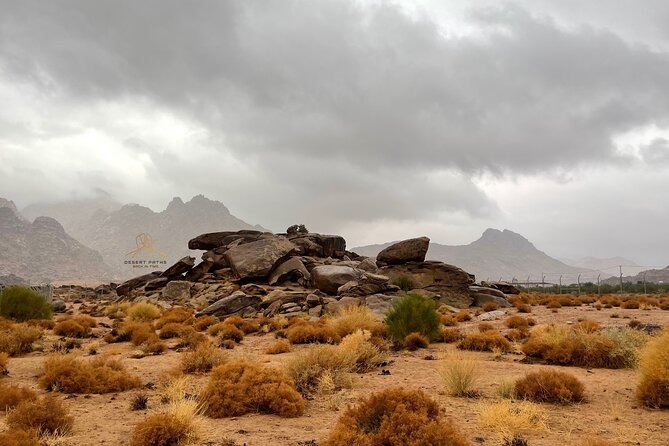
- The route covers both coast and mountains: You go from the Red Sea at Haql to Wadi Tayyib Al Ism, Madyan, and Jabal Al-Lawz.
- The biblical claims are interpretations: The tour presents Jabal Al-Lawz and nearby sites as possible Exodus locations, not as facts accepted by all scholars.
- This is a private trip for up to four people: You share the vehicle, guide, meals, and schedule only with your own group.
- Meals are included: The package lists two breakfasts, two dinners, and three lunches.
- The optional climbs are serious: Elijah’s cave takes about five hours, while a Jebel Maqla summit climb can take about ten hours.
- Winter and early spring make more sense: One booking note recommends February or March, while June has been described as too hot.
Why Jabal Al-Lawz is the heart of the journey
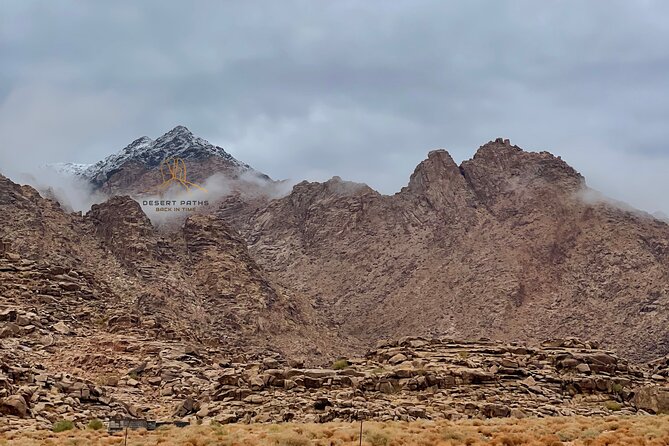
This trip is built around a debated idea: that the mountain called Jabal Al-Lawz, including the peak known as Maqla, may correspond to the biblical Mount Horeb or Mount Sinai.
The tour does not simply show you a mountain and ask you to take the claim on faith. It links several nearby features to events in Exodus. You see a possible campsite, rock structures described as an altar, remains associated with twelve pillars, carved stones, a graveyard, and a site identified as the Golden Calf altar.
You should keep your expectations measured. These connections are part of the tour’s interpretation and ongoing research. They are not universally accepted archaeological conclusions. That does not make the visit pointless. It means the most rewarding approach is to listen, look closely, ask questions, and separate what you can see from what the guide believes it means.
I find that this kind of setting works best for people who enjoy forming their own views. The mountains, dry valleys, black rock, wells, and old carvings give you plenty to study. The biblical story adds a strong human frame, but you do not need to accept every identification to appreciate the setting.
More tabuk and neom tours in Saudi Arabia:
- Wadi Disah Adventure from Tabuk | Al Ula
★ 5.0 · 18 reviews
Day one: from Tabuk to Haql and the Red Sea
The tour starts at 7:00 a.m. at the Hilton Garden Inn Tabuk. Pickup from Tabuk Airport is also offered, with the airport transfer listed at about 30 minutes. Starting early is sensible because the first day combines a long transfer with two substantial stops.
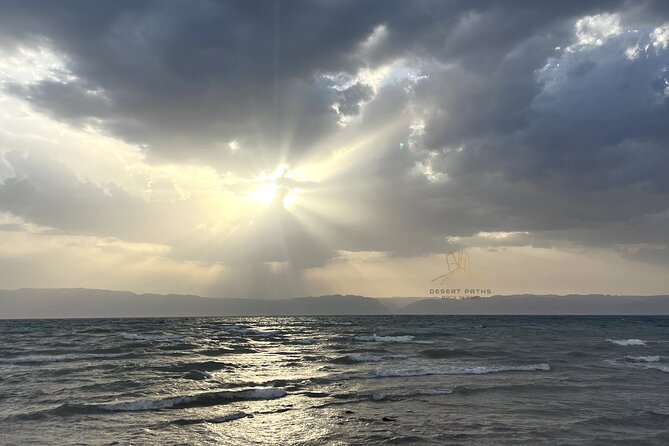
At Haql, you visit a proposed Red Sea crossing point opposite Nuwaiba Beach. The site is valued here for its connection to the Exodus story, but it also gives you a direct look at the coast, clear water, and broad views across the Red Sea.
Plan on about three hours at Haql. That is enough time to hear the explanation, take in the setting, and consider the geography for yourself. The important point is that this is not presented as a standard beach outing. You are there to examine a possible route used by Moses and the Israelites.
The crossing theory is one of the more speculative parts of the tour. The guide can explain why this stretch of coast is proposed, but you should not expect physical proof sitting on the beach. I would treat Haql as an opening scene, a place that gets you thinking about distance, water, escape, and the scale of the Exodus account.
Wadi Tayyib Al Ism, a possible Elim oasis
The next major stop is Wadi Tayyib Al Ism, reached after the Red Sea visit. The tour identifies this valley with Elim, where Moses and his people are said to have camped after leaving Marah.
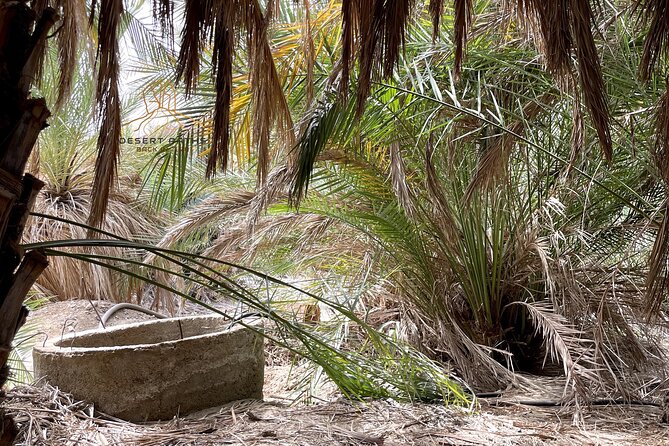
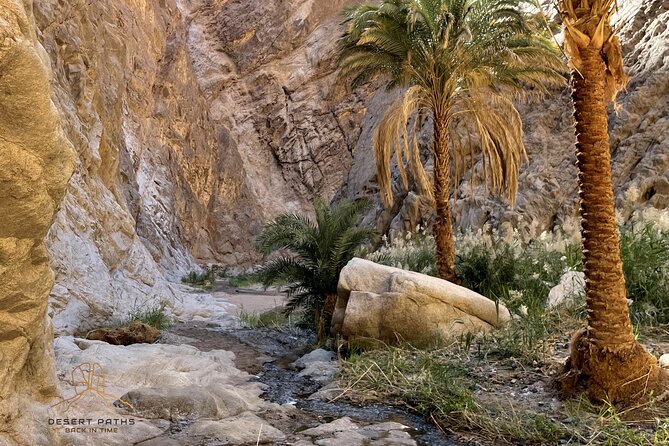
Here the setting changes sharply. Tall rock walls surround a valley with greenery, date palms, wells, and clear pools. The wells have been preserved for local Bedouin use and watering animals, which gives the site a practical purpose beyond its biblical association.
You spend about four hours in the wadi. That longer visit matters because this is one of the places where the physical setting carries the experience. After the open coast and desert roads, the water and shade make the valley feel like a natural stopping place.
I like this stop for two reasons. First, the oasis helps you understand why a group crossing dry country would have paused here. Second, it gives the trip a calmer rhythm before the more demanding mountain sites. You can focus on the plants, rock walls, wells, and pools, not just on the question of whether the biblical identification is correct.
Wear shoes suitable for uneven ground and bring sun protection. The stated fitness level for the tour is moderate, so you should be comfortable walking outdoors in heat and on rough surfaces. Dietary needs such as vegetarian, vegan, or gluten-free meals can be requested when booking, although the tour notes that not every option can be accommodated in every setting.
Day two: Madyan, Jethro’s tomb, and Moses’ well
Day two moves into the area associated with ancient Madyan, known locally as Al Bad’. The town is linked to Moses’ years with Jethro, his future father-in-law.
One stop includes caves described as Jethro’s tombs. The tour presents one cave as a possible burial place for Jethro. The site is compared in appearance to Petra in Jordan and Mada’in Saleh in Saudi Arabia, though you should not expect a large, fully developed archaeological complex.
The appeal is the combination of rock-cut spaces and the local story attached to them. Your guide can explain how the caves fit into the tradition surrounding Jethro and Moses. The visit lasts about three hours, giving you time to examine the site instead of rushing through for a photograph.
You also visit a well associated with the story of Moses helping Jethro’s daughters water their sheep. In the biblical account, this is where Moses met the woman who became his wife, often called Zipporah or Sephora.
Again, it is important to distinguish belief from proof. The well is a physical place, but the link to the biblical episode is an interpretation. I think the stop works best when you use it to picture the ordinary side of the story: water, animals, family, work, and a stranger offering help.
A few more Saudi Arabia trips to weigh up
- Historical Riyadh Self-Guided Audio Walking Tour
★ 3.5 · 11 reviews - Jeddah historical Walking Tour AL-Bald
★ 4.5 · 8 reviews - Prophet’s Mosque Walking Tour with Historic Hejaz Railway
★ 4.7 · 4 reviews
The Split Rock and the Rephidim story
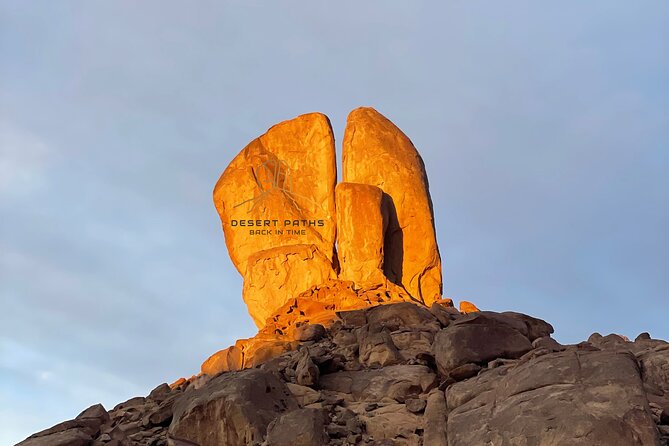
From Madyan, the route continues to the Split Rock of Horeb in the area identified as Rephidim. The biblical story says Moses struck a rock and water came out for the people.
You can climb up to the rock, with about two hours allocated for this part of the day. The climb is a reminder that this is an outdoor expedition, not a coach tour with flat paths and frequent facilities. You need sensible shoes, water, and a willingness to move over rough terrain.
The rock itself is the focus, but the guide’s explanation gives it meaning. You are asked to consider whether this could be the place described in the story, while also looking at the stone as a natural formation in its own right.
A short drive away, you see petroglyphs carved into dark stones on a hill. The tour connects the hill with the account of Moses holding up his hands while Joshua fought the Amalekites in the valley.
This is a good example of how the trip layers separate pieces of evidence and interpretation. The carvings are visible. Their age and meaning require explanation. The link to Moses and Joshua is a belief offered by the tour, not something the carvings can prove by themselves.
Day three: the altars and camp at Jabal Al-Lawz
The final full day centers on Jabal Al-Lawz and the nearby peak of Maqla. You visit the area described as the camp where Moses and his people stayed.
The tour points out a rock altar made without chiseled stones and the remains of columns said to represent the twelve pillars Moses erected before climbing the mountain. The setting is stark and powerful. The lack of polished structures is part of the appeal for people who want to compare the physical remains with the biblical text, which describes an altar made from uncut stones.
You then visit a large arrangement of stones with carvings of bulls, people, and animals. The tour identifies this as a possible altar connected with Aaron and the Golden Calf.
This is likely to be one of the most memorable stops, but also one of the places where you should ask careful questions. A stone arrangement and ancient carvings are visible. The connection with the Golden Calf is an interpretation. A good guide should make that distinction clear while still explaining why the site matters to the tour’s wider theory.
A nearby graveyard is linked to the account of about 3,000 people being punished after worshiping the Golden Calf. The visit adds another layer to the story, but the same caution applies. You are seeing an old burial area, not a confirmed biblical mass grave.
The time listed for this portion is about three hours. Since the day includes several separate places around Jabal Al-Lawz, expect the pace to involve driving between sites, short walks, explanations, and time to look around.
Optional climbs: Elijah’s cave and Jebel Maqla
The core trip already includes mountain areas, but you can add a half-day climb to a cave associated with Elijah. The climb takes about five hours and is advised only for people with strong physical fitness.
You can choose to camp at the mountain’s foot or return to Tabuk for the night. The tour company arranges this extension separately, so confirm the extra cost, meals, transport, and sleeping setup before you commit.
A further extension adds a full day for climbing one of the Jebel Maqla peaks. The stated duration is about ten hours. This is not a casual add-on for anyone who simply wants a better view. It is a demanding mountain day and should be considered only if you are fit, prepared, and comfortable with a long climb in a remote setting.
The extra time may appeal to hikers who want more than roadside viewpoints. For others, the three-day route will be enough. I would not add the summit just because the mountain is the central symbol of the tour. Add it because you genuinely want a strenuous outdoor challenge.
Guides, meals, and the desert camp
The guide team is a major part of the experience. Abdelaziz is specifically associated with the Saudi guiding side of the trip, while Gabriel has led groups through the area and handled customized routes. Abdo has been noted as a warm local partner, and Mamdu has also been named in connection with the desert journeys.
Because staff assignments can change, confirm who will lead your departure. What matters is having a guide who can do two jobs well: explain the biblical and local traditions, and handle the practical work of moving safely through remote desert country.
The package includes two breakfasts, two dinners, and three lunches. Meals have included traditional Saudi food, and the tour can consider vegetarian, vegan, and gluten-free requirements if you state them when booking.
Camping may be part of the arrangement, but the information allows for different styles, including Bedouin, modern, and VIP options. Ask exactly what your price includes. Some groups have preferred a more basic setup with tents and food cooked over an open fire, while others choose greater comfort.
That choice changes the tone of the trip. Basic camping gives you a stronger sense of the desert and makes shared meals part of the experience. A more comfortable option may suit you better if sleep and privacy matter. Do not assume your preferred style is included in the $5,740 price without written confirmation.
Is $5,740 good value for four people?
The price is $5,740 per private group of up to four. With four people, that works out to $1,435 each. For two people, the per-person cost is much higher, so this trip makes more financial sense for a full group.
The price reflects private transport, specialist guiding, a route across several remote areas, airport pickup availability, and five included meals. It also buys a focused experience that would be difficult to arrange independently, especially for a visitor who does not know the roads, local customs, or access arrangements.
Still, it is an expensive tour. Tips are not included, and the optional climbs are not included. Accommodation and the exact camping category need clarification because they affect the real value.
Before booking, ask these practical questions:
- Which guide will lead the trip?
- Is accommodation included, and is it a hotel, tent, or selected camping style?
- How much driving is planned each day?
- What vehicle is used for the remote sections?
- Are the optional climbs priced per group or per person?
- Can dietary requests be met for every included meal?
Free cancellation is available up to 24 hours before the 7:00 a.m. start time. Within 24 hours, the payment is not refunded. Poor weather or failure to meet the minimum group size can lead to a new date, another experience, or a full refund.
Who should book this Saudi Arabia tour?
You are a good match if you have a strong interest in the Bible, ancient travel routes, desert geography, or unusual Saudi destinations. It also suits outdoor-minded people who enjoy walking, basic camping, and asking questions about evidence rather than expecting a fixed answer.
You should think twice if you dislike heat, rough ground, long days, or interpretive sites where the historical link is debated. This is not a polished city excursion. It is a private expedition with religious themes, desert travel, and some demanding optional climbs.
The best time appears to be February or March. June can be too hot, and even in cooler months you should prepare for sun and dry conditions. A moderate fitness level is needed for the main program, with strong fitness required for Elijah’s cave or the Jebel Maqla summit.
Should you book Walk In Moses’ Footsteps?
Book it if you want a rare view of northwest Saudi Arabia and are comfortable treating the Mount Sinai theory as a possibility rather than settled fact. The coast at Haql, the oasis at Wadi Tayyib Al Ism, Madyan, the Split Rock, and Jabal Al-Lawz create a memorable chain of places, even when the biblical links remain open to debate.
At $5,740, I would gather three or four people and confirm the lodging, vehicle, guide, and optional-climb costs in advance. If you do that, the price becomes easier to justify. You are paying for access, logistics, local help, meals, and a private route through a part of Saudi Arabia that is not simple to explore on your own.
FAQ
Where does the tour start?
The tour starts at 7:00 a.m. at the Hilton Garden Inn Tabuk, 7701 Prince Sultan Road, Al Salam, Tabuk.
Can I be picked up at Tabuk Airport?
Yes. Airport pickup is offered, and the airport transfer is listed as taking about 30 minutes.
How long does the main tour last?
The main experience lasts approximately three days. The itinerary also offers optional extensions for Elijah’s cave and a Jebel Maqla summit climb.
How many people can join the private tour?
The private tour is for your own group, with a maximum of four people.
What meals are included?
The package includes two breakfasts, two dinners, and three lunches.
Is camping included?
The tour information refers to Bedouin, modern, and VIP camping styles, but you should confirm the exact accommodation and camping arrangement included in your booking price.
How fit do I need to be?
You need a moderate level of physical fitness for the main tour. The Elijah’s cave climb requires strong fitness, and the Jebel Maqla summit climb is also advised only for fit participants.
What happens if the weather is poor?
If poor weather causes the experience to be canceled, you will be offered another date or a full refund. If the minimum number of participants is not reached, you will be offered another date or experience, or a full refund.
Just added around Saudi Arabia
- Discover Taif City★ 5.0 · 4 reviews
- Wadi Al Disah Tour★ 4.1 · 5 reviews
- Sawda Mountains Hiking Trail★ 5.0 · 4 reviews
- Kiswah Factory Tour From Makkah (Mecca)★ 4.0 · 5 reviews
- Makkah Holy Places / Ziyarat: Private★ 4.0 · 9 reviews
- Horse Riding Experience in Riyadh | Tanomah | Jeddah | Al Ula★ 4.0 · 5 reviews
- All Ground transfers Saudi Arabia, Jeddah to Makkah Makkah to Medina to Airport★ 4.5 · 8 reviews
- Edge Of The World Trip (Private Trip)★ 5.0 · 3 reviews
Tours, compared.
Edge of The World with dinner & Campsite Shared Tour
Read our review →